
The number of people losing their lives to altitude sickness in high Himalayan regions is increasing every year, with the highest proportion being young people.
Twenty-four-year-old Angmu Budha of Jumla went to the Phulbari highland meadow in Ward 8 of She-Phoksundo Rural Municipality, Dolpa, last May/June to collect Yarsagumba. Situated at an elevation of over 4,000 meters above sea level, she suffered from altitude sickness in that very pasture. She was being transported to a health facility about a day’s journey away for treatment but she passed away en route.
Chandra Jung Hamal (33), also from Jumla, lost his life to altitude sickness on March 28 in the Lhonak area of Phaktanglung Rural Municipality-6, Taplejung. An officer at the Samriddha Pahad organization, Hamal had traveled to the 4,600-meter-high Lhonak region for work.
Though from the same district, Budha and Hamal had ventured into different high-mountain regions for different purposes. Both were in their prime working years. Yet, the cause of their deaths was the same: altitude sickness.
An analysis of data from the National Emergency Operation Center (NEOC) shows that the number of people dying from altitude sickness in Nepal’s high-Himalayan regions is rising year by year. According to NEOC records, in roughly three months between April 14 and July 9 of this year, 55 incidents of altitude sickness were reported nationwide. The center recorded 21 deaths in these incidents, nearly all of them young adults. Three senior citizens and one young girl also died during this period.
However, the recorded figures do not capture the full reality across the country. Those who stop traveling to rest, descend to lower altitudes or recover through local treatment after experiencing mild symptoms often go uncounted in official disaster statistics.
Why young people in particular?
Young people consistently outnumber the elderly or chronically ill among those dying from altitude sickness. According to data from the National Emergency Operation Center, 15 out of the 21 people who died by July 9 this year were young adults aged 18 to 35. Three senior citizens and one young girl also lost their lives to altitude sickness during this period.
In 2025, altitude sickness claimed 41 lives (34 men and seven women) including seven senior citizens. In 2024, 25 people died from the condition (21 men and four women). In 2023, 15 deaths were recorded, comprising 10 men and five women.
Previously, altitude sickness was primarily considered a risk for the elderly, the chronically ill or those in weak physical condition. Today, however, physically fit, working-age and confident young adults top the casualty list. Details of the deceased indicate that active age groups engaged in working, collecting Yarsagumba, trekking and going on religious pilgrimages in high-altitude regions face the highest risk.
According to Dr. Prakash Budhathoki, former spokesperson for the Ministry of Health, age alone does not determine the risk of altitude sickness. “Because older adults have slightly more space between the brain and skull, the effect of brain swelling can be relatively less severe,” he explained. “In young adults, there is less space, so severe complications can emerge much faster.”
Dr. Prakash considers human behavior to be the major issue. “Driven by overconfidence in their physical capabilities, most young people attempt to gain too much elevation in a single day. They ignore early warning signs from their bodies and refuse to pause their journey,” he added. “It is precisely this tendency that turns mild altitude sickness into a fatal condition.”
Anyone can be at risk
Many people still associate the risk of altitude sickness solely with foreign tourists engaged in trekking or mountaineering. However, various incidents have proven that perception wrong. For instance, a few months ago, 17-year-old Manjali Rokaya of Jumla died of altitude sickness while at Kangla Pass in Dolpa for work.
In April/May, 51-year-old Mukesh Kumar Singh of India traveled to Mustang to visit Muktinath. As he was preparing to leave his hotel for the Muktinath Temple, he suddenly fell ill. Although he was rushed for treatment after experiencing acute respiratory distress, he could not be saved.
Gopiram Gaha (75) of Kaligandaki Rural Municipality-2, Syangja, fell ill on April 26, 2025, while traveling to perform ancestral rites in Kagbeni and visit Muktinath. Symptoms of altitude sickness appeared after he crossed Myagdi and reached Marpha in Mustang. He was taken to the Provincial Hospital in Jomsom for treatment but he passed away.
This clearly indicates that altitude sickness is not limited to mountain climbers or foreign tourists. Recently, more people are heading to high-altitude regions for employment, research and recreation. People also venture to higher elevations for harvesting Yarsagumba. All of them are at risk of altitude sickness.
According to Dr. Rabin Kadariya, Chief of the Annapurna Conservation Area Project, 25 people died from altitude sickness in the Annapurna region in the Fiscal Year 2025/26. Of those, 12 were Nepalis and nine were Indian, along with one national each from Mexico, Japan, Singapore and Spain.
Greater the haste, greater the risk
As elevation rises, oxygen levels drop. Altitude sickness is the physical response that occurs when the body fails to adapt to the lack of oxygen at high elevations. In other words, it happens when the body is not given enough time to acclimate to the changing environment as one ascends.
Many domestic and foreign tourists jeopardize their lives by traveling to high-altitude regions rapidly by vehicle, failing to get adequate rest and dismissing the early signs given by their bodies.
According to former Health Ministry spokesperson Dr. Prakash, the risk of altitude sickness increases above 2,500 meters, though some individuals may experience issues even at lower elevations. He emphasizes that ascending gradually and allowing sufficient time for acclimatization is essential.
International mountain medicine guidelines recommend staying overnight once reaching 3,000 meters, limiting daily elevation gain to no more than 500 meters, and scheduling a rest day every three to four days.
According to Dr. Prakash, travel must be stopped as soon as early symptoms appear, such as headaches, nausea, loss of coordination while walking, extreme fatigue or difficulty in breathing. “If symptoms worsen, descending 300 to 1,000 meters is the most effective treatment,” he said.
Experienced climbers also note that the rush to reach destinations quickly increases the risk. According to them, the practice of ascending gradually as in the past is declining, while the trend of covering long distances in a short time has grown. People keep pushing themselves higher just as their bodies are trying to adapt.
Phurba Tenzing Sherpa, who has summitted Mount Everest 20 times, stated that starting a journey without sufficient information about the mountain or trekking route is the root cause of many accidents. An increasing number of people set out without considering how many days a route requires, where to rest, what medical supplies to carry, whether a guide is necessary or if their physical condition is suitable for the journey. He says, “The mountains punish carelessness more than physical weakness.”
Purnima Shrestha, who has reached the summit of Everest three times and logged experience climbing eight peaks above 8,000 meters, also views the trend of rushed travel as the biggest challenge. She notes a growing habit of trying to complete a five- to six-day trek in just three or four days, walking immediately from vehicle drop-off points without resting, failing to prepare for weather, medicine and nutrition, and traveling alone without a guide. “Before the enthusiasm to climb a mountain, it is essential to understand it and make the necessary preparations,” she says. “Only then can lives remain safe.”
No alternative to immediate rescue if altitude sickness strikes
According to doctors and rescuers, time is critical for patients with altitude sickness. A condition that initially appears mild can quickly become severe if treatment is delayed.
Hospitals or well-equipped health posts are not available in all popular high-mountain destinations. Many patients become critically ill or lose their lives before ever reaching a hospital. Doctors and rescuers therefore advise descending to a lower altitude as quickly as possible when altitude sickness strikes in high-mountain areas.
If descending immediately is not feasible, helicopter evacuation may be necessary. However, adverse weather can prevent helicopters from flying, making the rescue of such patients in high-altitude regions a major challenge, according to medical and rescue personnel.
Chandra Jung Hamal lost his life in the Lhonak region of Taplejung while waiting for rescue. Having reached Lhonak on March 22, Hamal spoke with his wife in Jumla via video call around 7:00 p.m. on March 28.
Seeing her husband’s face and lips turn blue, his wife, Tika Pathai, asked, “What happened?” Hamal replied, “I’m having trouble breathing.” To reassure his wife, who had given birth just a month earlier and was deeply worried, he said, “Don’t stress, a helicopter is coming and we will return tomorrow. I’ll be fine.” When Tika tried calling him early the next morning, he didn’t answer. Around 8:00 a.m., someone picked up the phone and told her, “We couldn’t save him.”
According to Santosh Gautam, Project Operations Manager at Samriddha Pahad, Hamal could not be saved because weather conditions delayed the rescue effort. “If the helicopter had arrived on time, he could have been saved,” he said. “He passed away during the night and the helicopter arrived only in the morning. The helicopter sent to fetch a patient ended up carrying back his body.”
“Driven by confidence in their physical capability, most young people attempt to gain too much altitude in a single day. They ignore the early warning signs given by their bodies and refuse to stop their journey. It is precisely this tendency that can make mild altitude sickness fatal.”
- Dr. Prakash Budhathoki, Former Spokesperson, Ministry of Health
Angmu Budha died en route while being transported from the Phulbari highland meadow in Dolpa toward a health post. In Manjali Rokaya’s case, after she suffered from altitude sickness at Kangla Pass in Dolpa, reaching a health post took too long. Though she was brought to the health post after four to five days on foot, her life could not be saved. These incidents show that in the mountains, the clock for treatment begins ticking not at the hospital but right at the site of the incident.
According to Murali Joshi, Manager at Simrik Air, a helicopter charter company involved in rescue operations, the most critical factor in saving altitude sickness patients is timely evacuation. “If we can reach the patient and perform the rescue within about an hour of receiving the alert, we can save them,” he said. However, he noted that adverse weather, clouds and poor visibility in high-mountain regions often prevent helicopters from flying or landing, leading to rescue delays.
Manager Murali added that the tendency to dismiss early symptoms during a trek as minor also heightens the danger. “Even if a person seems fine during the day, their condition can suddenly become critical as night falls. We cannot fly at night. In many cases, by the time we wait until morning, the patient has already passed away. At that point, it is no longer a rescue operation but a body recovery,” he said.
Murali explained that while bad weather can temporarily prevent immediate landing, helicopter crews remain on standby to launch flights as soon as approval is granted by the Civil Aviation Authority and the Ministry of Home Affairs.
Krishna Acharya, President of the Trekking Agencies’ Association of Nepal (TAAN) Gandaki, does not view altitude sickness incidents solely as the result of individual negligence. According to him, most high-mountain regions are served only by basic district hospitals, lacking both specialist doctors and adequate oxygen supplies.
High tourism promotion, low safety measures
As tourist arrivals in high-mountain regions continue to grow, has safety infrastructure kept pace accordingly? This has become the most pressing question today. While the death toll from altitude sickness rises year after year, the government does not appear to pay sufficient attention to spreading awareness about the health risks associated with high altitudes.
Establishment of well-equipped health posts staffed by qualified medical personnel and supplied with adequate medicines in high-traffic tourist hubs remains delayed. Rescue mechanisms, too, are still far from adequate.
Krishna Acharya, President of TAAN Gandaki, notes that the trend of traveling solo without a guide has further heightened risks. On the other hand, he contends that while Nepal prioritizes tourism promotion, it has failed to match that momentum with investments in tourist safety and preparedness.
He highlights that the non-implementation of the Trekkers’ Information Management System (TIMS) has compromised both traveler safety and state oversight. “After this government-mandated system fell out of implementation, compliance with safe trekking standards weakened,” Acharya stated. “Basic information management, such as tracking where tourists are, monitoring their condition and deploying emergency rescues, is no longer functioning effectively.”
Acharya also pointed out that foreign tourists dying in Nepal’s high Himalayas due to delayed rescues and inadequate medical treatment poses a severe threat to the country’s tourism image.
According to experts, most altitude sickness deaths are preventable. Key preventive measures include timely information, thorough preparation, gradual ascent and stopping to rest or descending at the first sign of symptoms. They emphasize that trained guides, effective rescue systems and essential health infrastructure could save many lives. Ultimately, the issue stems less from the harshness of the mountains than from individual preparedness, safety frameworks and policy priorities.
Ganesh Bhattarai, a veteran tourism entrepreneur from Pokhara, stated that while altitude sickness in high-mountain areas is not a new problem, rescue systems and health infrastructure remain inadequate. Recalling his own experience with altitude sickness during trips to Kailash Manasarovar and Lhasa in 1993, he shared, “I have suffered from altitude sickness multiple times myself but I recognized the symptoms and took precautions.”
According to Ganesh, who has been active in the tourism industry for decades, the lack of prior preparation and information among travelers bound for the Himalayas is a major issue. “Everyone heading on a mountain trek must educate themselves about elevation, weather and health risks,” he said. “Emergency rescue and cardiac care services must be strengthened in high-altitude areas. If timely treatment is provided, many lives can be saved.”
Ganesh noted that despite the rising number of tourists visiting high-mountain regions, health infrastructure, rescue mechanisms and workforce development have failed to keep pace.
Nepal Police Spokesperson Deputy Inspector General Abinarayan Kafle explained that search and rescue efforts are often challenging because most altitude sickness incidents occur in remote and high-altitude areas. He added that as soon as an incident is reported, rescue teams are deployed in coordination with local police, district police offices and other security agencies as needed.
According to him, due to the rise in altitude sickness cases, the deployment of Nepal Police personnel for search and rescue operations has been increasing every year. Over the last four fiscal years alone, nearly 2,000 police officers have been deployed for such incidents. Police Spokesperson Abinarayan emphasized, “If those heading to high-mountain regions take health precautions, altitude sickness cases and the resulting loss of human life can be reduced.”
‘Awareness can reduce altitude sickness deaths’
A conversation with Phanindra Prasad Paudel, Chief of the Preparedness and Response Branch at the National Emergency Operation Center (NEOC), regarding why deaths from altitude sickness occur and what efforts are underway to prevent them:
Why are deaths from altitude sickness on the rise?
There is no single reason. Failures to take necessary precautions during travel, a lack of adequate information and a degree of carelessness have all contributed to these incidents. While the government is taking necessary steps, adequate information about the risks has not reached everyone.
Has trekking safety deteriorated following the suspension of the Trekkers’ Information Management System (TIMS)?
It may have had some impact but that alone cannot be blamed for weak safety. Adverse weather, insufficient preparation by travelers and a lack of essential equipment also heighten the risk.
Is the state investing adequately in trekkers’ safety?
The government is currently making sufficient investments in this area. Workforce management, risk reduction and awareness programs are actively being carried out. Necessary work is moving forward keeping potential travel risks in mind.
Do you think the TIMS system should be reinstated?
Yes, reinstating this system is necessary. It makes it easier to keep records of travelers, track their status and coordinate rescue efforts in the event of an incident.
Where is the government falling short?
The government is clearly moving forward with improvements. However, to make efforts more effective, further policy and regulatory refinements are required. Record-keeping, safety checks, information management and problem-solving processes must be made more systematic.
What is needed most right now for trekkers’ safety?
An effective record-keeping system backed by proper information flow is the single most crucial need. If we can efficiently disseminate information about where travelers are going, which routes they are taking and what risks exist at their destinations, many accidents can be prevented.
What should be the first step toward achieving this?
This requires coordination and collaboration among all relevant bodies. Initiatives such as weather forecasting, IT-based warning systems and information dissemination through mobile apps must be made effective. While the government must ensure safety, citizens must also remain alert and responsible.
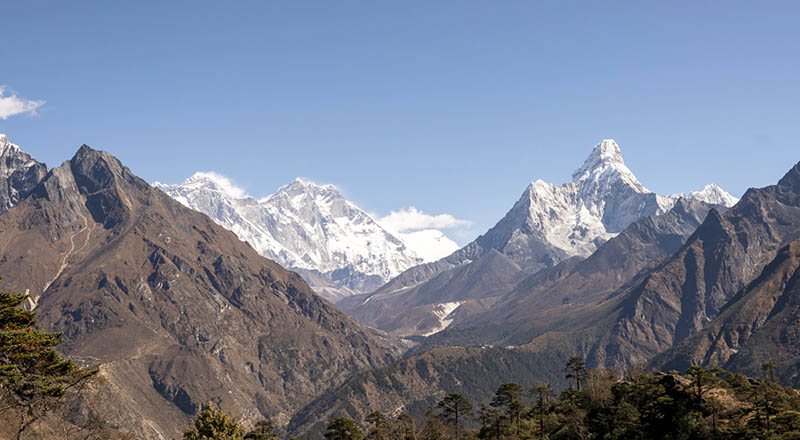
Cover Photo: A high-altitude village in the Everest region. Photo: Rajneesh Bhandari/National Geographic Society.
Please adhere to our republishing policy if you'd like to republish this story. You can find the guidelines here.
Comments